Wooten's Heritage Built Gordon Boots
Jan 27, 2026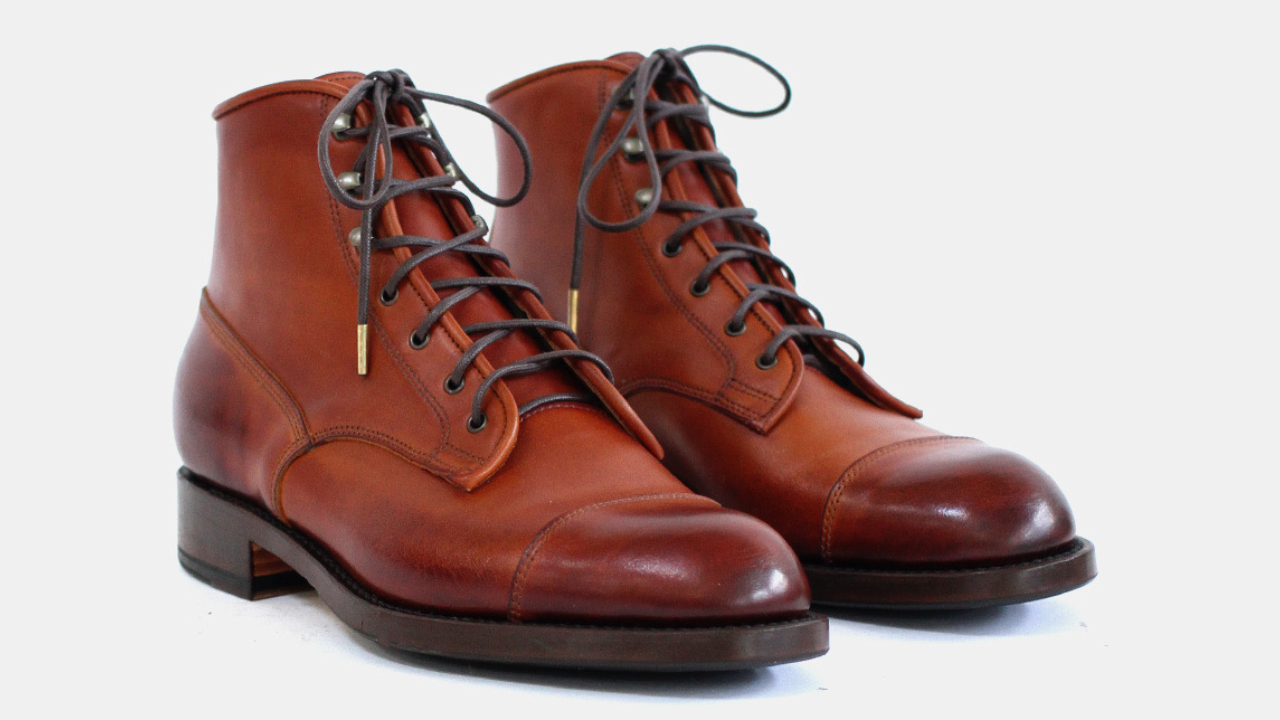
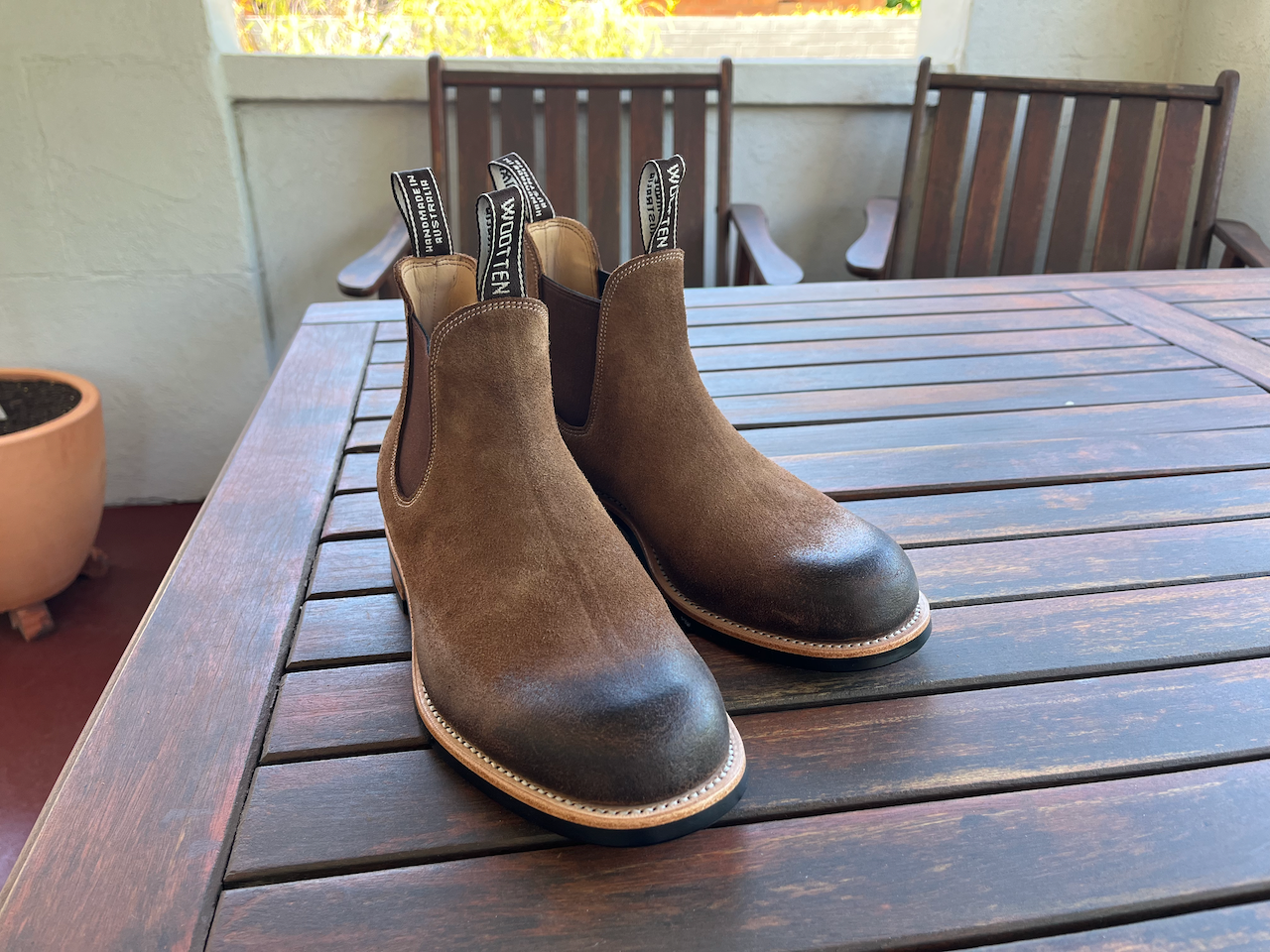
These are mine and my wife's Wootten Gordon Boots, in their Heritage series, one of three series of boots that they offer. Click anywhere on the picture to be taken to my YouTube review.
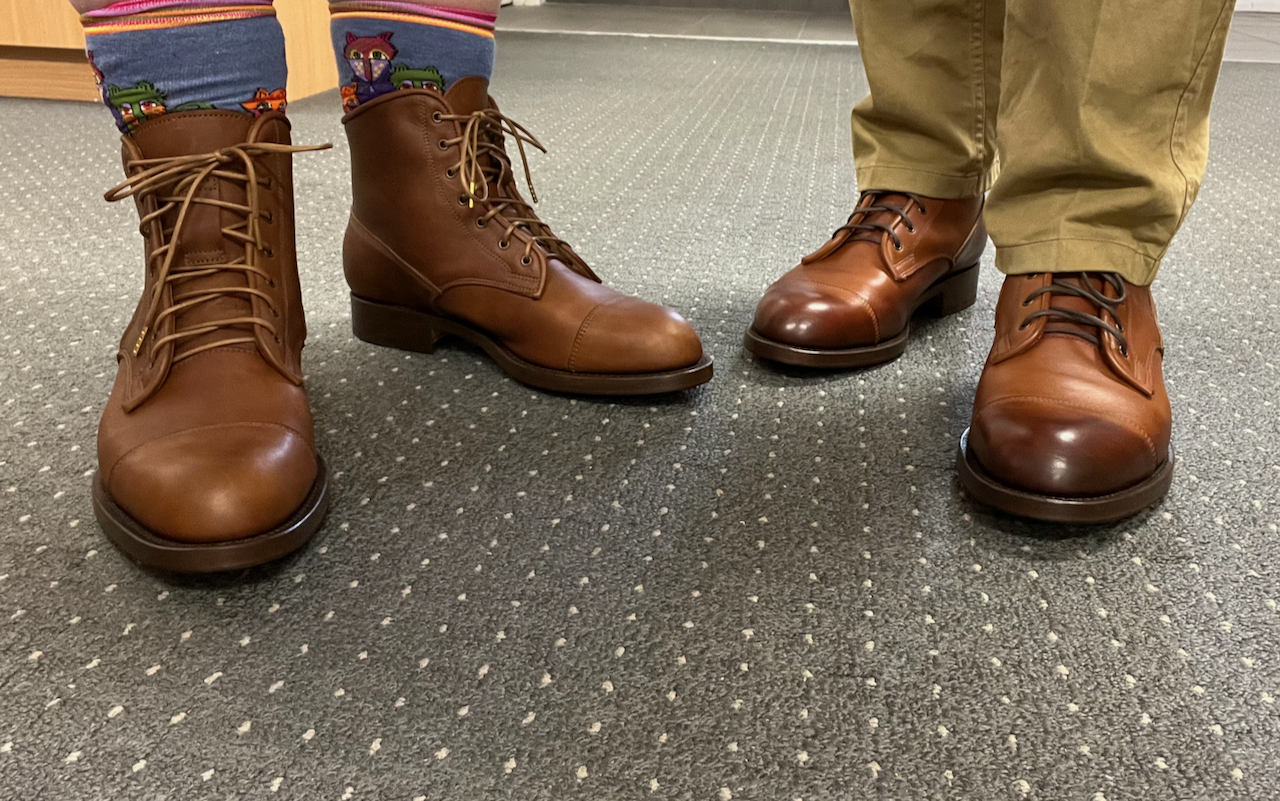
Wootten is a small, family-run leather goods workshop that makes footwear, as well as bags and other leather goods by hand, with a very small volume production. This is because they hand-make their goods, unlike the economies of scale achieved by large factory manufacturers like R M Williams here in Australia, or, say, Alden in the United States.
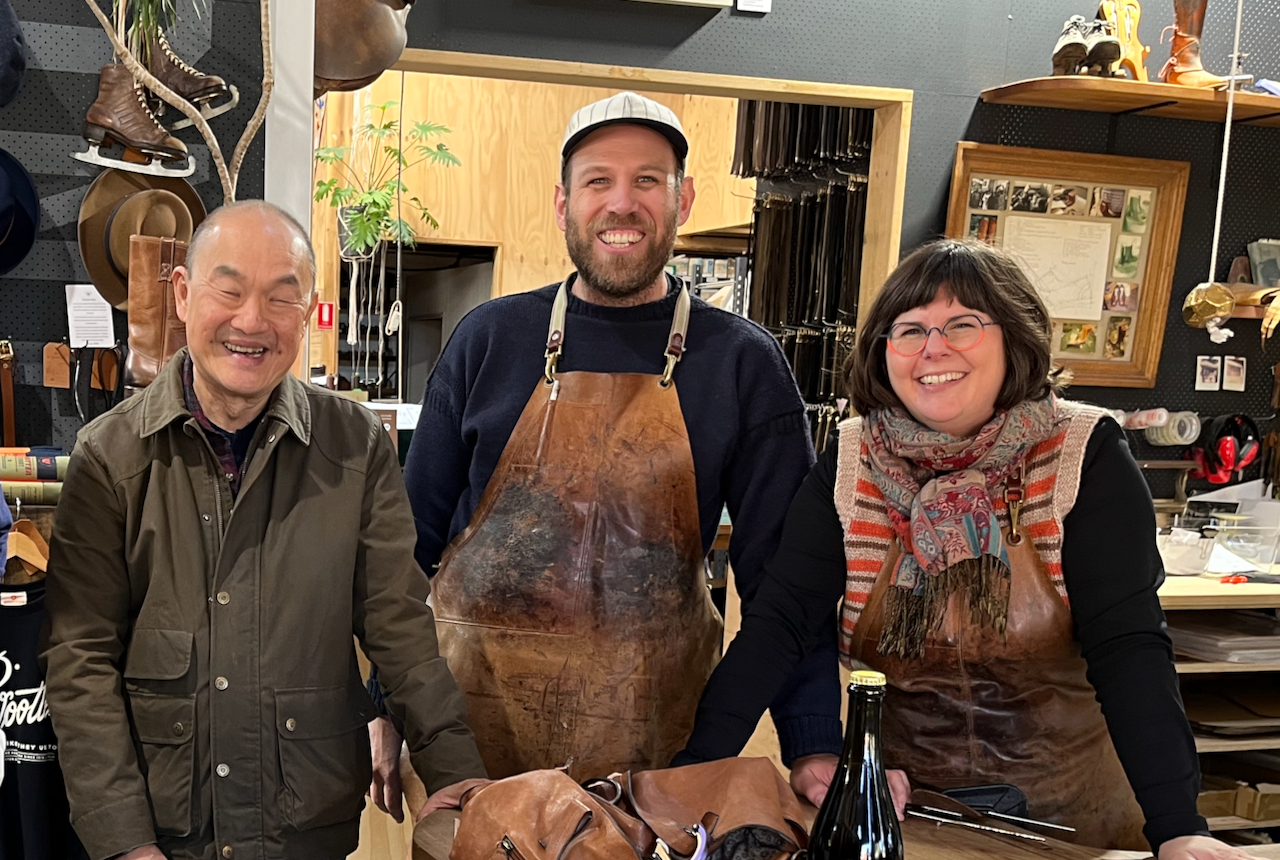
I suppose you can say that Woottens is more similar to the American Pacific Northwest bootmakers, except that due to the volume of the market the PNW boots have, they are able to scale with a larger workforce and find some economies of scale. Jess and Krys, the owners of Wootten, are intimately involved in every aspect of the manufacturing process and have only 3 or 4 other workers learning from Jess.
At the top, I spoke of Wootten having three series of boots.
They have about 7 or 8 basic patterns of boots, and then add a couple of derivations of taller boots and logger boots and so on. For most of their styles, they will make from time to time, small batches that are ready to wear, but where there are no optimisation options at all. Their ready-to-wear series are called "Original".
In the "Classic" series, the boots are made to order, but there are limited customisation options. In the Gordon Classic, you can choose from 5 colours, 2 lasts, 2 sole options and 3 edge finishes.
Then, graduating to the "Heritage" series, the boots are pretty much fully customisable where you can choose from 27 to 30-plus colours depending on availability, thread colour, eyelet colour and configuration, choice of collar finish from raw edge to bound, choose construction method between Mackay stitch and Blake stitch, 14 sole options, different welt options and edge finishes.
In both the Classic and the Heritage series, you can negotiate to have their lasts customised to your exact measurements, for an add-on price.
This pair is from the Heritage range, and I’ll take you through my options.
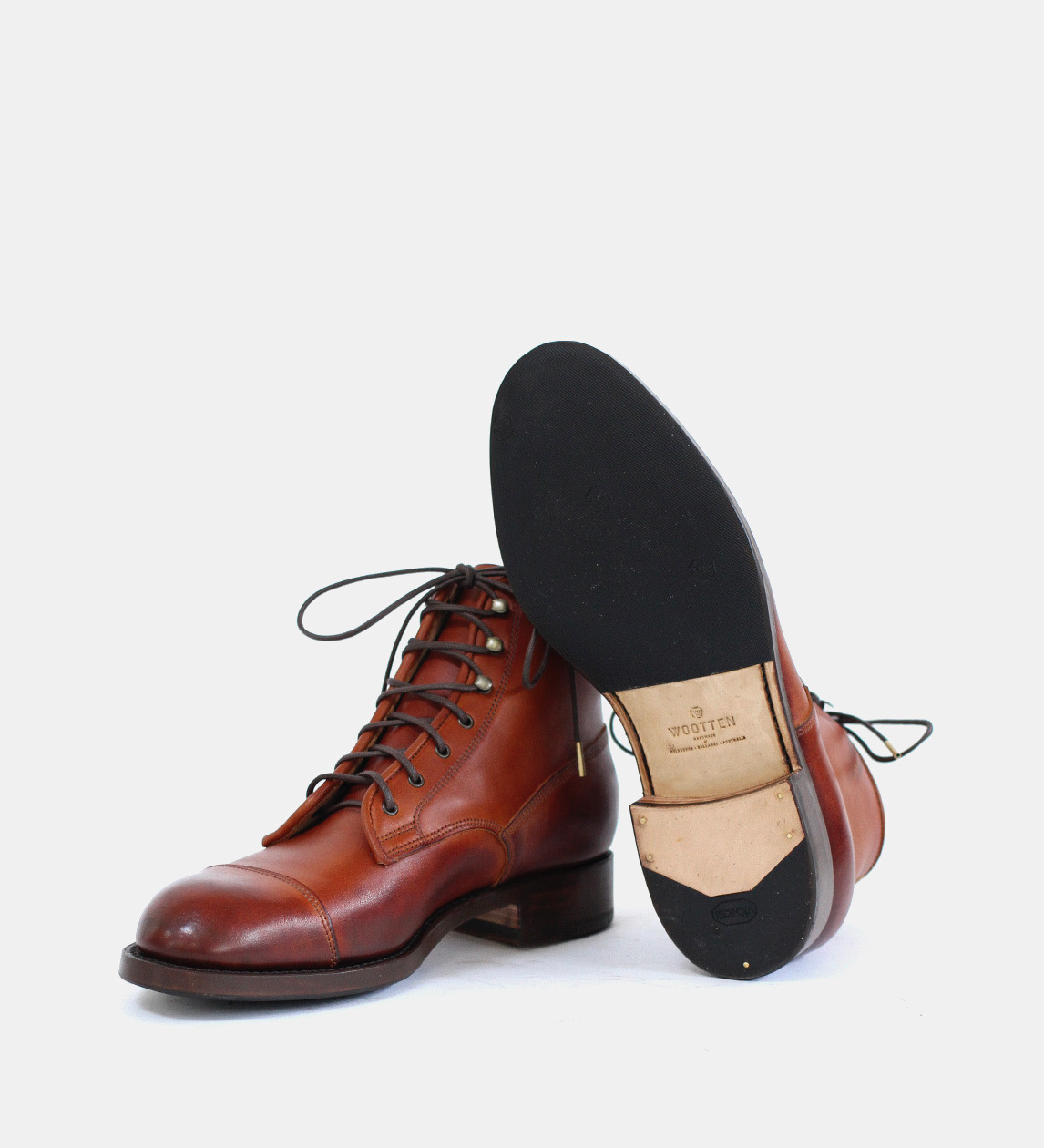
The Wootten Gordon boot is that style you can call a Derby Boot or a service boot. It’s a 6-inch high boot, or to be exact, between 5 to 5 and a half inches because of a lovely curve they put on the collar, sloping back toward your back of the foot. The pattern includes a long heel counter cover that goes all the way to connect to the edge of the quarter piece, and there is a small backstay coming out from under the heel counter cover.
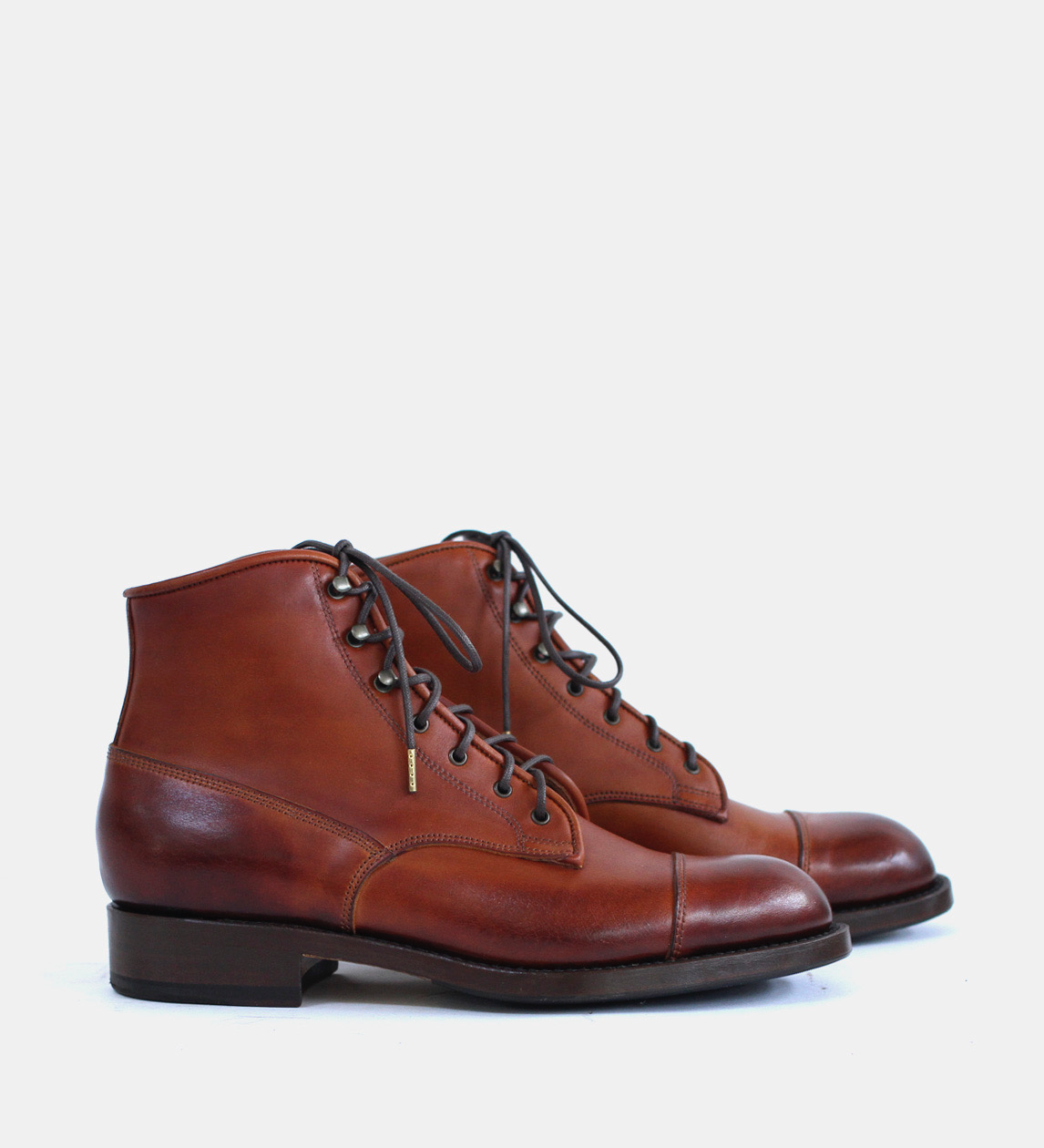
It has a flat sole and a block heel.
I chose the yearling leather, hand-dyed by Chris in English Tan, and hand-burnished by Jess at the toe and heel. I opted for a cap toe, but you can also get it in a plain toe. I also opted for the French binding at the edge of the lace facings and up the collar. I chose a leather sole with a topy, and a stacked leather heel with a rubber insert.
You can choose between two lasts or toe shapes, and I chose the more almond-shaped Cambridge E last for a dressier boot. The Gordon last also has an almond toe, but I found the ridged profile of the toe less dressy.
Customisation included building up the lateral width up a width.
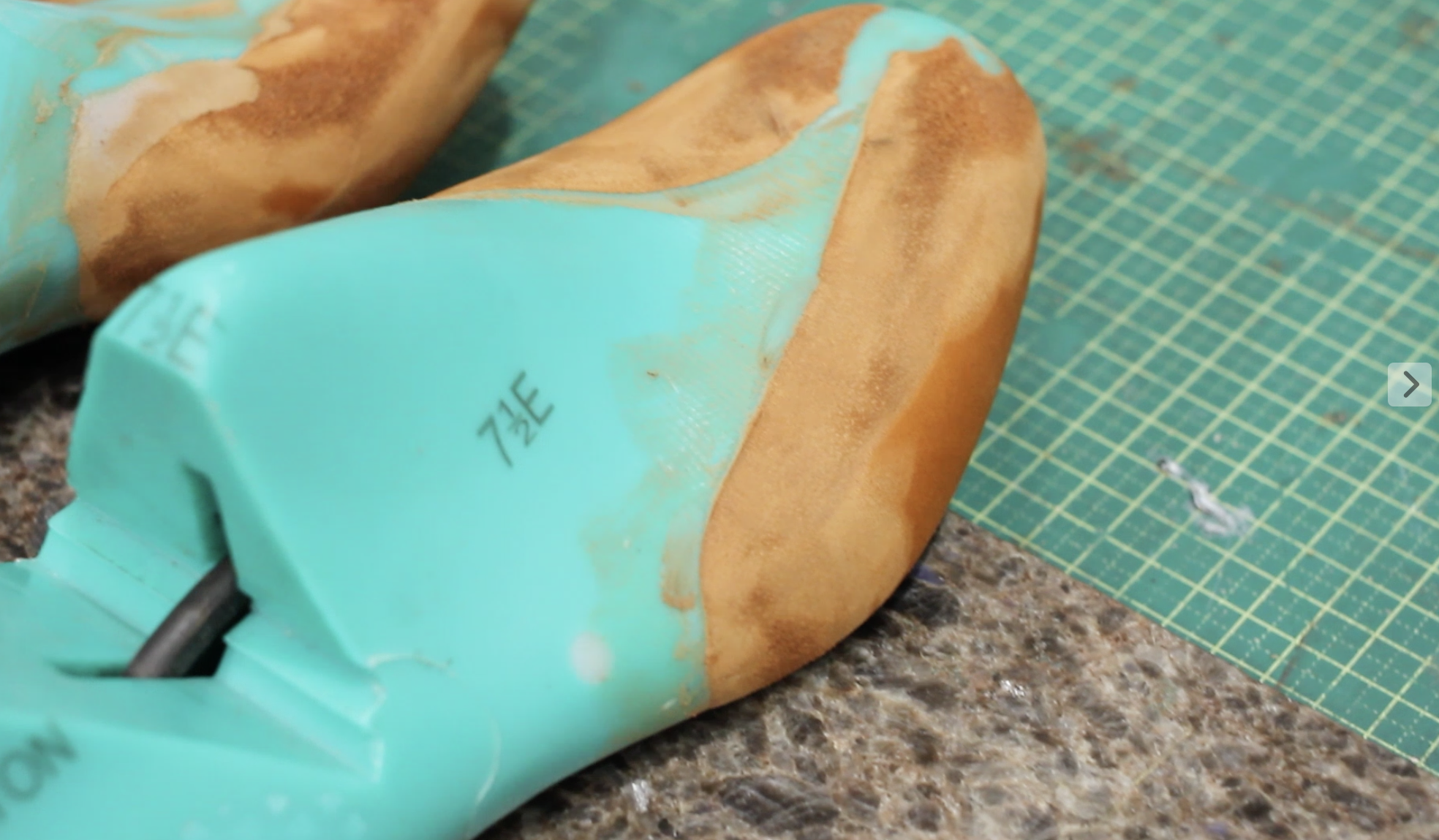
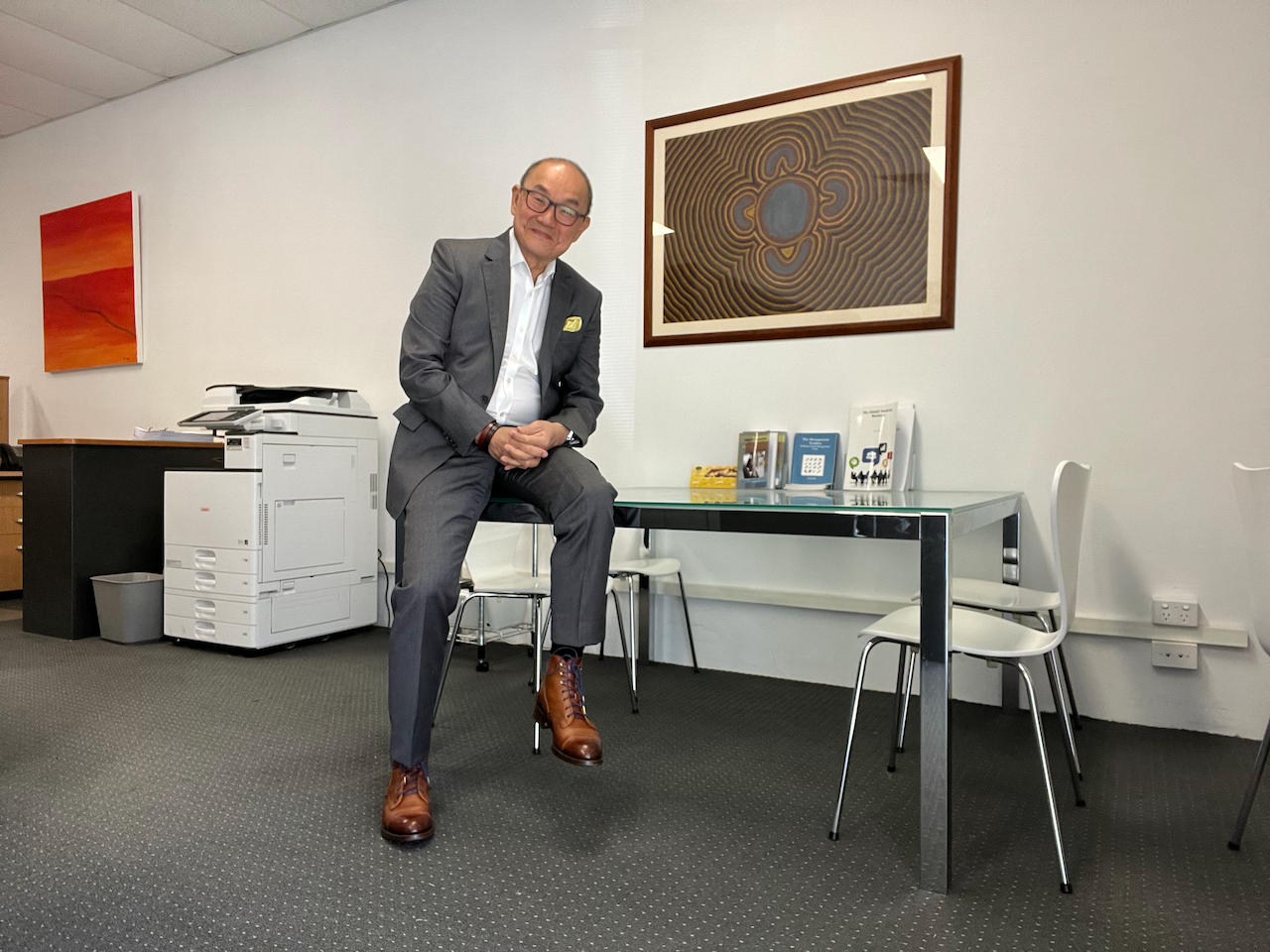
As a result of my choices, I feel this is a dressier boot but in the burnished English Tan, also capable of being dressed down.
I have worn it to meetings with a medium grey suit, which allows it to look dressy but relaxed.
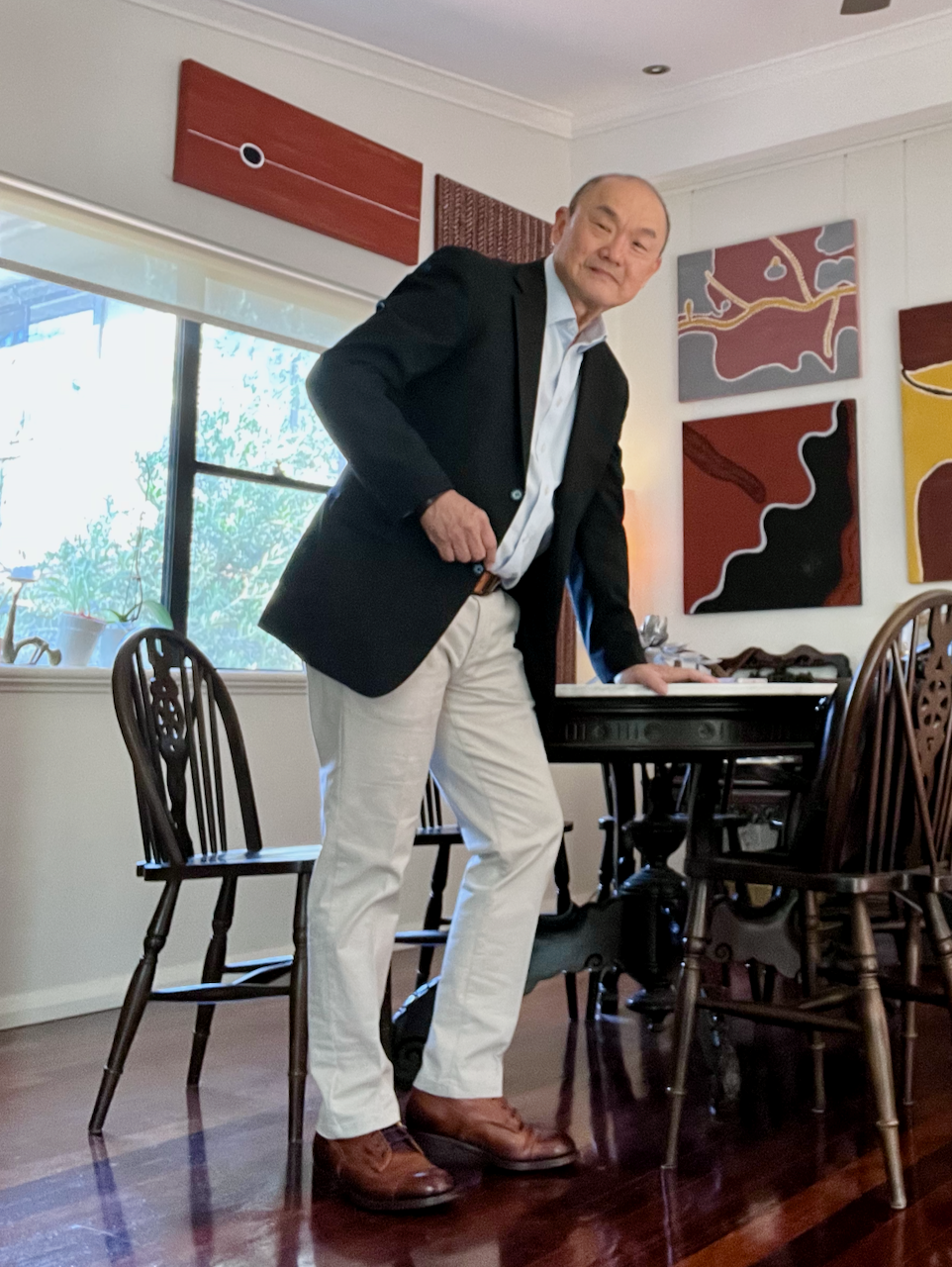
I have also worn it with cream chinos and a blazer for a relaxed business casual.
CONSTRUCTION
All the materials used were offered by Wootten, and chosen by me, from Australian makers, although you can also get international materials such as Vibram and Dr Sole soles. But if I’m ordering from an Australian maker, I’m choosing think global but act local. It helps the economy, it helps small businesses, and it helps the environment in whatever small way, so I chose mainly locallly made materials.
Starting from the bottom, this is put together using the Mackay Welt stitch construction method, otherwise also known as Blake Rapid Stitching.
In plain old Blake Stitching, you assemble the uppers of the boot, and then you glue on an outsole and internally directly stitch the uppers to the outsole. Unless you then cover the outsole with say, a full slip rubber cover, with Blake Stitched shoes, you will often see the stitch running under the sole.
It’s cheap to make, has some flexibility advantages, but is said to be a lot less waterproof because moisture can seep through the stitch holes directly inside. Blake stitching also provides a very narrow edge since there is no need for a welt stitch, and so is often found used in dress shoes.
In Blake Rapid or Mackay stitching, a stitch is indeed run through inside directly to the midsole, which is cut wider so it looks like there’s a welt. Then an outsole is glued on and an edge welt stitch is run through the midsole and outsole and the finished it looks like a welt, but instead that’s actually the edge of the midsole sticking out. In this case, the edge of the midsole is rolled with a hot iron so that it looks grooved, and underneath, there is a channel carved to the leather outsole so that the stitches are not exposed. A rubber, protective half topy is then glued on to provide a little more grip than raw leather, and to protect the leather outsole.
There are three stacks of leather put into the heel, which is then topped with a leather and rubber insert top lift.
Unlike a Goodyear welted boot, where the welt going around the edge of the boot creates a cavity which is filled with cork or foam, in the case of Blake Rapid Stitching, there is no such cavity. But Jess Wootten uses a midsole that has a doughnut hole cut into it, and he fills that doughnut hole with cork, so that you can get the shock absorption and the formation of the hills and valleys of your feet, the more you wear it.
I showed this a bit more fully in my review of the Wootten Smith Chelsea Boot so you can go watch that video, by clicking on the photo below.
I think currently, Jess does all the stitching work, and you can see the pieces of the pattern stitched together with perfect preciseness and the stitch lines are clean and even. The top of the heel counter cover is triple stitched, very closely together, and the other parts are double stitched, very precisely. The French Binding is very clean, very cleanly bound, with no raw edges escaping.
Inside the boot, there is a removable foam filler, and once you take it out - I won’t because I can’t get my iPhone camera down there - you can see the veg tanned insole with the initial Blake stitch going around the edge. They also glue a short sock liner at the heel, on which they print the brand logo, model, last and other details.
The whole boot, including the tongue is fully leather lined. The tongue is not gusseted, and I did find that with some wear, they drifted to the outside of each boot. You can ask for lace keepers to be sewn on, and my wife did, but I opted to leave them. When they started drifting, I asked Jess, and he said that if I sent them back they could sew the lace keepers on, or I could get a cobbler do a small stitch to one side of the tongues to hold them. I didn’t want to send the boots back or entrust them to a cobbler, so I discussed with him my old approach of cutting two slits in the tongue, as to whether that might damage the tongue and lining, but he said it should be fine, so, I did.
The toe box and heel counter are veg tanned leather, wet formed by hand to take the shape.
The hardware is antiqued brass, and I chose 4 smaller eyelets and three smaller speed hooks.
The uppers leather is from a tannery in Geelong, to the south west of Melbourne and where ballarat is to the west of Melbourne, Geelong and Ballarat are only about 90 kilometres away from each other.
Think global, act local.
It is full grain bovine and I believe chrome tanned. It’s three and a bit to just under 4 millimetres thick, and has a medium to firm temper, or feel when you try to bend it, and a smooth, firm hand, or feel of the surface. Wootten get it in natural and then dye it themselves by hand. On completion, Jess burnishes it by hand.
Casting an eye over the whole boot, you can’t see a fault, and it is very, very similar to the finish of a Viberg service boot.
As this is chrome-tanned bovine leather, care is pretty simple. Obviously, brush them regularly to avoid any sand or grit to damage the leather. Personally, because I wear these at the dressier end, I tend to brush these at the end of the day after every wear, just before I put them away.
Sand and grit, especially if the grit becomes moist in the rain, can become like sand paper on the leather, so brushing is key.
Conditioning should also be easy with a good quality cream product like Venetian Shoe Cream or Saphir Renovateur. Because of the hand dyed burnishing, I’d be careful about conditioners with too much petroleum products which may lift off some of that burnishing.
The leather takes a high polish, so while I tend not too on most of my boots, I will polish these with a high quality boot polish, in neutral, after each conditioning. Again, because of the burnishing, don’t use any cheaper polishes like Kiwi which may have a high solvent content.
SIZING, FIT AND COMFORT
As for to sizing, fit and comfort, these are custom fitted to the measurements taken to my feet.
My size was true to size in the UK convention, a seven and half. However, my feet, and my right foot in particular is wider than normal, and Woottens decided to use the E fit last in seven and half, and then build up the lateral measurement to an 8 size last.
For my wife, who also got a pair made, she got them made in different lengths by a half size, and with width adjustments to fit her bunions. Obviously, if you can afford the extra, it’s well worth your while to get the fit customised.
The fit is obviously great, with all that care and attention paid to my feet at the beginning. It fits snug, so I tend to wear these with normal socks as it can be too snug with thick or boot socks. In wear though, they are really comfortable. The sole is firm but flexible, so offers a lot of support but doesn’t require a lot of break-in. The leather is firm but shaped to my feet after only a couple of weeks' wear, so again offers the support, without the issues.
The shock absorption is pretty good with the leather, cork and removable foam combination. A steel shank offers enough arch support, and that’s beefed up by the design of the last which hugs the curves under your feet.
Despite the firm temper of the leather, it’s one of the most comfy boots I have.
There is one thing to be aware of though.
The binding at the collar makes the collar edge very firm. Think about it, you have a piece of thin leather that’s rolled and then stitched to the uppers and lining, in a very thin space. I did find it hard to break in, and if you want a less firm experience, you should opt for the raw leather edge.
VALUE AND SUMMARY
These are handmade boots, so I’ll tell you the price, and then tell you why I think they are worth it.
They are AUD$1,050. My wife’s boots - including all the customisation around uneven feet and bunions on both feet were almost five hundred dollars more.
I contacted Trickers in the UK and asked them how much it would cost to customise a last to my measurements. They have a bespoke service where they take one of their lasts and customise it to the precise measurements of your feet. They quoted me a starting price of 3,500 pounds sterling, but they would keep that last forever in case I ordered another pair of boots again, and the cost included the making of a dedicated boot tree. Making a pair of boots was on top of that.
So, having a last to your exact foot measurements is not cheap, nor, if you ask my wife who has the worst trouble in shoes with her feet, nor is it wasteful, because if they fit your feet, you won’t go back to anything else.
Also, when I reviewed the Smith Chelsea Boot, I got a comment from someone that the price must be a price gouge. How could a pair of boots cost so much, and it didn’t even have the big factory and employees of a PNW bootmaker.
I’m sorry, but that’s a total misunderstanding of how business works. Respects to my favourite White’s and Nicks, and you’ve seen me rave in my reviews of their boots, but that’s comparing an apple and an orange. Business is about economies of scale. Ask any Banding bootmaker working in a small shed with 3 or 4 workers. They charge US 500 to a thousand per pair of boots and trust me, they are not millionaires.
As a small business, materials, bought in small quantities, is expensive. Overheads such as workshop rents, heat and light, rates and property taxes, all have to be paid for, and are proportionately, compared to orders and turnover, incredibly expensive per working man-hour or per boot made. Go and watch my break down of the price of a pair of Alden Indy’s and the ratio of materials and overheads is ridiculous.
So value, for a handmade boot, made with care and precision, and fitting you like the literal glove - I’d pay those prices any day for something I wear in comfort and gives me the looks, pretty much for ever in time.
I know, many, many people are battlers and truly cannot afford it and buy Clarks or Timberland. Then again, a Whites MP is not affordable for those people either.
Stay connected with news and updates!
Join our mailing list to receive the latest news and updates from Bootlosophy.
Don't worry, your information will not be shared.
We hate SPAM. We will never sell your information, for any reason.
